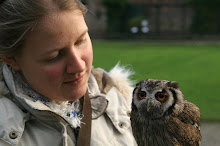
For anyone interested, I'm switching to wordpress, because it's cool...
No really, wordpress is much prettier, so I thought I would try it out. The blog is the exact same name: Everybody's Fond of Owls
Sunday, August 7, 2011

Book Review: Introverts in the Church

I just read a really great book that I think anyone in a Christian community should read. I'm an INTP on the Myers-Briggs personality type indicator, which means I love thinking about things and making connections between different areas of my life. I quite often look at my world through the lense of the Myers-Briggs test. Through my involvement in Chi Alpha Christian Fellowship at ASU for four years, as well as my small group experiences at Redemption Church, I've noticed that most people don't understand how much being an introvert or an extrovert affects your experience in any Christian community. This was one issue that was never dealt with in my community, even though many of the introverts consistently struggled with finding a place in that community where they both fit well and were capable of investing throughout an entire school year without burning out.
Introverts in the Church: finding our place in an extroverted culture by Adam S. McHugh talks about this issue in the church today, and offers much practical advice in the areas of Christian community, spirituality, leadership and evangelism for introverts living in an extroverted culture. Introverts in the Church starts by first identifying the problem (that there is a serious disconnect between the extroverted church culture in the United States and the 50% of the church body that is introverted) then discussing many different ways introverts can invest themselves by using their personality rather than trying to become extroverts. The book also delves into the gifts that introverts can offer within the community and on leadership, gifts that complement extroverted strengths!
My favorite thing about this book was how the author encourages introverts to blossom in their own gifts, but never gives introverts permission to withdraw from community or isolate themselves completely. While McHugh does point out that parts of the extroverted expectations of the American church are not actually required by the bible (which means that introverts don't need to do everything!) the fact is that we are required as Christians to invest in people, both in Christian community and in reaching those outside our faith. Introverts in the Church gives many ideas on how to be an active part of the church without simply acting extroverted, while still following the commandments the Bible gives for all Christians
I would recommend this book to anyone investing in a Christian community or leading one (which should be all Christians!). Introverts will find the book helpful in suggesting new ways to live out their faith, while extroverts may find a better understanding of the introverts in their community, and news ways to encourage them to be themselves within the community. Leaders may find practical ways to encourage their introverted disciples in self-understanding, community involvement, and eventually, leadership. I think that Introverts in the Church could be a book that starts to change Christian communities for the better!
*If you're interested in the Myers-Briggs Type Indicator, I would suggest the wikipedia article for understanding the concepts quickly and the Myers-Briggs website for a quick assessment of your own personality and what that means for you.
*If you like the book, check out McHugh's blog Introverted Church!
Tuesday, April 12, 2011
Book Review: Flight of Shadows

Flight of Shadows by Sigmund Brouwer is a suspenseful dystopian novel that plays with themes of extreme science, extreme government control, and the effects of extreme religion. The novel follows the story of Caitlyn, a hybrid human born with a deformity that sets her apart from everyone else. She's on the run from her old life, and from the authorities who want to control the powers that her genes hold.
The novel is middlingly suspenseful, but won't keep you up at night. "Flight of Shadows" is very enjoyable, though not always novel. As a one who greatly enjoys the sci-fi/fantasy genre, and especially dystopian novels, I found Flight of Shadows a bit predictable at points. There were a few twists, though, that really kept the plot going. Most of the characters are well formed, though they all fall into very typical categories (conflicted hero, unpredictable trickster support character, etc). My favorite character was the classic intelligent policeman who is on the opposite side from the hero, but probably will not stay there.
I really only had two problems with this novel: First, "Flight of Shadows" is actually a sequel to a previous book by Brouwer, "Broken Angel," which I have not read. The author did try to explain the previous connections between the characters, but not knowing the whole back-story made "Flight of Shadows" a little harder to read. Secondly, "Flight of Shadows" follows about four story-lines within the overall story. There are a lot of characters, and the book switches between story-lines almost every chapter. If you're not good at keeping track of characters, you might have some problems. Again, I would highly suggest reading "Broken Angel" first, as the characters would have more depth and hopefully would be less confusing.
If you've never read a dystopian novel, try this one out. If you don't know what a dystopian novel is, think "The Giver" by Lois Lowry, "Anthem" by Ayn Rand, "Uglies" by Scott Westerfield, "Brave New World" by Aldous Huxley or "Nineteen Eighty-Four" by George Orwell. A dystopia is a future society that has regressed in some way from the present one. "Flight of Shadows" will introduce you (or reintroduce you, if you read one of these books in high school) to the dystopian genre. Overall, "Flight of Shadows" is a worthwhile, if not spectacular, read; one that might even make you think a little bit about where the future is going.
*I received this book for free from WaterBrook Multnomah Publishing Group for this review* I really do believe in what I wrote here though :) In simple terms: I enjoyed the book, would recommend it, but would not re-read it.
Thursday, February 17, 2011
Musings: Normal vs. Abnormal
What is normal? It is too easy to just say normal is what we see to often. That really doesn't answer the question. At least not from a philosophical, let's base our morality/philosophy on this definition point of view. Do we define normal by what we know to be abnormal or abnormal by what we know to be normal? Or a mixture of the two, I guess? What are our expectations of something once we have determined if it's abnormal or normal? Do we say everything abnormal is bad and normal is good? If we don't then how do we treat it? In Generosity, a girl with 'abnormal' characteristics is first heralded then torn down for these genes which she did not choose and cannot control. Is it actually important to judge based on normal versus abnormal? If we're only talking about genetically based characteristics, then what does it matter? If Thassa is like that because of her genes, then how can she share anything for the good of humanity? If it's because of her and some choice she made or makes, then why would defining it as normal or abnormal even be a useful distinction? Perhaps the inherent-ness of normal and abnormal do not need to be fully genetically connected, which would leave the ability to find what makes a person one way or the other in their early life--a nurture related determinism instead of a nature related one. But it still doesn't seem the most helpful distinction. Even if at that level it can be helpful, in many cases the label of abnormal (or mental illness, or diseased) has a very detrimental effect on a person's life (whether because of their own response, or society's response to them, or both). This effect often seems bigger than the benefit of being able to put people into categories. Especially, if all we do as a society is go trigger-happy with the drugs, without actually teaching anyone how to manage their own lives without dependence on some pill, then how do these labels really help. Our whole society seems set up to help people fail, even as we have higher and higher incidences of 'mental illnesses.' Maybe the more important thing is to invest in finding how to help people help themselves--therapy, I'm saying--rather than in more drugs which take away symptoms. And then actually training people. But also, it seems like it is necessary to have a revolution in how we think about normal and abnormal. If we as a society can't get past the idea that someone with bipolar is disadvantaged, and ill, then we will never be able to use non-pill means of dealing with these diseases--because there are huge benefits to being somewhat bipolar, to being somewhat autistic, in what one can offer society. Many of the most influential and world-changing people in our history have been suggested to have had mental illnesses of one sort or another--and it allowed them to reach a much higher potential (perhaps even pushed them to) than the 'normal' human beings of the time.
Musings: the Pursuit of science
Is explaining things by science to the public actually ever helpful or even true? Without a very strong basis in science (and I mean one of multi-discipline multi-year study, really) it is very easy to make mistakes in the interpretation of science, and even in the pursuit of science. This happens pretty much every time scientific information is presented by the media to the public, with some sort of scientific background. This background is often paid for by the companies that benefit from it--unsurprisingly, since they're the only ones who have enough reason for the financial investment. However, many times the research does not even live up to the standards of peer-reviewed, pseudo-scientific method science that the academic world requires. But, when something is told to the public, if it's convincing at the first, it will live on long past the science. Therefore, should science even be used as a basis for media-mediated advice? Does this not just tear down the credibility of science every time the opinions go back and forth? On the other hand, what's the point of science if it is not used to change people's lives (or at least animal's lives, the environment, etc)? If the problem is the system, not the goals or the science, then is there another system that would work better? (other than the level of democracy/capitalism we use today)
Is striving for unbiased science actually worthwhile? Does it not need there to be an absolute truth to reach? To what extent should we try to be unbiased, and how far can we actually go? Since everything we 'know' is through our own senses, so is automatically biased. But which is more worth knowing: What we can perceive through our senses or some absolute that we cannot?
Is striving for unbiased science actually worthwhile? Does it not need there to be an absolute truth to reach? To what extent should we try to be unbiased, and how far can we actually go? Since everything we 'know' is through our own senses, so is automatically biased. But which is more worth knowing: What we can perceive through our senses or some absolute that we cannot?
Musings: Homo Evolitus
How should evolution and purposeful evolution be thought of in today's human world? We are not under the same evolutionary pressures as when we developed, but we also will not evolve at any reasonable speed (even for evolutionary change), because of our ability to help people live, and even reproduce, who would not have been able to before. We have eradicated so many diseases, that the only ones left are the kind that are very good at adapting, or allow reproduction before becoming fatal (if they ever get fatal). Many health problems (which I personally hesitate to call diseases, by my own definitions at least) actually result from what were historically adaptations. Should we then begin to change ourselves? Not just behaviorally, but at the genetic level? Homo Evolitus. And if we should, how do we tell if a trait has any benefit today? Ex. in Generosity, the 'happiness gene.' We know why the pattern of normal anxiety/stress and occasional peaks of happiness/ecstasy were useful historically, but are they still necessary today? And how can we tell without trying (and causing some humans, or at least animals, to take genetic risks?
Musings: Getting out of our paradigm
So I'm going to post some things I've been thinking about, in relation to my classes and other things that have been going on in my life. I just sat down and wrote out what I've been thinking about/struggling with, so they not very well formed. A lot of the writing is in the form of questions, as well, because I don't have the answers yet (and may never, of course). I'm just going to post them though, and will hopefully come back at some point and edit/add to them. Some of the topics may be used for papers this semester, too...so that might lend a more concise form to them :) Also, there are a few book references from my class, that will be a bit incomprehensible if you haven't read the book--but ask me if you want to know more!
Getting out of our paradigm. Is it possible to do so? Does it come down to a forced change every time, or can we in some way choose to change? How do we judge how much our views are affected by our own paradigm. Is it possible to broaden our paradigm? Or is it only possible to change it? For example, in Avatar the main character and the scientists seemed to mostly just switch sides, rather than encompass both. This often seems to be the case (perhaps because I/We most easily see the polarizations) in people who have gotten out of their own cultural prejudices (most easily, indigenous peoples advocates in the US/Western culture). As a listener, I often get the feeling that I should be ashamed of everything Western and just convert to the indigenous viewpoint.
Getting out of our paradigm. Is it possible to do so? Does it come down to a forced change every time, or can we in some way choose to change? How do we judge how much our views are affected by our own paradigm. Is it possible to broaden our paradigm? Or is it only possible to change it? For example, in Avatar the main character and the scientists seemed to mostly just switch sides, rather than encompass both. This often seems to be the case (perhaps because I/We most easily see the polarizations) in people who have gotten out of their own cultural prejudices (most easily, indigenous peoples advocates in the US/Western culture). As a listener, I often get the feeling that I should be ashamed of everything Western and just convert to the indigenous viewpoint.
Sunday, March 21, 2010
Top Ways to Procrastinate:
So I'm currently avoiding writing a lab report and studying for a different lab final...woohoo! Here's my best guilt-free procrastination methods:
1. Cooking! Somehow I always make my best meals when I'm supposed to be doing something else...or running late for school :)
2. Blogging! Whether its philosophy, cooking, or something totally random, blogging never feels like a waste of time...when I get around to it ;)
3. Phone Calls to Family! Somehow, I never feel guilty talking to my mom, dad, or sister...yet those conversations often occur on days when studying should be the priority
4. Cleaning! HAHA, like I ever actually do THAT! No really, I have been known to sort my room when avoiding something, especially when avoiding cleaning my bathroom or doing the dishes...
5. Playing with my Bird! She never gets enough attention when I'm at school, so OF COURSE I need to give her more when I'm home!
6. Studying my Bible! Yes, this can be used to procrastinate...just start reading Genesis and looking up the etymology of words and the historical background and you'll be fascinated too...I could spend hours!
And now, the guilty procrastination devices:
Somehow most of these are on the computer:
1. facebook
2. runescape
3. email
4. puzzle pirates
5. looking up grad schools :)
Also:
6. reading books
7. browsing the library
8. hanging out with friends for hours on end
9. watching movies
So there you have it, I'm sure I do more than that, but now back to my homework...
1. Cooking! Somehow I always make my best meals when I'm supposed to be doing something else...or running late for school :)
2. Blogging! Whether its philosophy, cooking, or something totally random, blogging never feels like a waste of time...when I get around to it ;)
3. Phone Calls to Family! Somehow, I never feel guilty talking to my mom, dad, or sister...yet those conversations often occur on days when studying should be the priority
4. Cleaning! HAHA, like I ever actually do THAT! No really, I have been known to sort my room when avoiding something, especially when avoiding cleaning my bathroom or doing the dishes...
5. Playing with my Bird! She never gets enough attention when I'm at school, so OF COURSE I need to give her more when I'm home!
6. Studying my Bible! Yes, this can be used to procrastinate...just start reading Genesis and looking up the etymology of words and the historical background and you'll be fascinated too...I could spend hours!
And now, the guilty procrastination devices:
Somehow most of these are on the computer:
1. facebook
2. runescape
3. email
4. puzzle pirates
5. looking up grad schools :)
Also:
6. reading books
7. browsing the library
8. hanging out with friends for hours on end
9. watching movies
So there you have it, I'm sure I do more than that, but now back to my homework...
Healthy Cooking in the College World: Breakfast
Eating a fast, healthy breakfast can be really difficult. However, breakfast is extremely important to a healthy eating pattern. I normally eat my breakfast in the car on the way to school, which really limits the options. If you have time, cereal and milk obviously makes a good breakfast, as do smoothies. Smoothies are really easy if you have some type of a blender. strawberries and bananas are a great base for any smoothie. bananas will thicken a smoothie. strawberries, other berries, and oranges all add a tartness. mango and pineapple go really well in a more tropical smoothie. Add peanut butter to a strawberry and banana one. Add yogurt to any (will add a flavor) for extra protein. Use juice or milk to make the smoothie thin enough to blend (milk will drown out the fruit if too much is used--juice is really the best way to go). Use frozen fruit or ice cubes to make it colder and thicker. Less juice is needed if fresh fruit is used, though.
Hot cereals can also be really healthy. I like to buy some good multi-grain cereals like oats or muesli from a healthier store (around me there's whole foods, sunflower market, and trader joe's). I then cook it and add frozen berries such as raspberries or blueberries and some chopped nuts (any kind works, I just chop the ones I use for snacks :).
If you're taking smoothies or hot cereal on the go, I suggest cups that can close and be left in the car, or washing the cup out as soon as you get to school, or going the not-eco-friendly way and using disposable cups. They get pretty nasty after a day in a hot car!
My other fast breakfasts are to buy drinkable yogurts, make toast and peanut butter, or to eat a protein bar...my favorites are luna bars, larabars, and the harvest whole grain powerbars. I only buy these if they're on sale though: my aim for my breakfast is to cost a dollar or less, which means a sale is needed on the energy bars and drinkable yogurts. I would also love any other suggestions in this category, as I don't have a lot of ideas for fast breakfasts!
Oh, and I also eat cold pizza whenever I have it :)
Hot cereals can also be really healthy. I like to buy some good multi-grain cereals like oats or muesli from a healthier store (around me there's whole foods, sunflower market, and trader joe's). I then cook it and add frozen berries such as raspberries or blueberries and some chopped nuts (any kind works, I just chop the ones I use for snacks :).
If you're taking smoothies or hot cereal on the go, I suggest cups that can close and be left in the car, or washing the cup out as soon as you get to school, or going the not-eco-friendly way and using disposable cups. They get pretty nasty after a day in a hot car!
My other fast breakfasts are to buy drinkable yogurts, make toast and peanut butter, or to eat a protein bar...my favorites are luna bars, larabars, and the harvest whole grain powerbars. I only buy these if they're on sale though: my aim for my breakfast is to cost a dollar or less, which means a sale is needed on the energy bars and drinkable yogurts. I would also love any other suggestions in this category, as I don't have a lot of ideas for fast breakfasts!
Oh, and I also eat cold pizza whenever I have it :)
Healthy Cooking in the College World: Snacking
No matter how healthy your meals are, your whole diet can go down the drain if you don't watch what you snack on. If you're anything like me, snacks are something I've never been able to get cut out completely, I've only been able to modify them. My eating preferences are to eat smaller meals and snack throughout the day, which can be really dangerous are carb heavy. So, here's how I go about it:
First, the best snacks are fruits and veggies. If I'm at home, I'll just eat raw fruits and veggies. Usually I eat ones I've chopped up, because that's a good way to not eat too many at once, since the work to do so keeps me from filling myself up completely. To make it more exciting, pair slightly sour fruits like oranges and strawberries with some cheddar cheese in small blocks. Eat veggies with some dressing. Eat apples with some peanut butter. Just make sure that the fruit and veggies are the main portion of the snack and the condiment or cheese is there as an accent only.
When on campus for work or classes, carry dried fruits and nuts with you everywhere. If you're worried about cost or have a hard time keeping yourself to small servings eat peanuts or sunflower seeds and raisins. Dried fruit and mixed nuts from a store that sells bulk are often reasonably priced when on sale. I like to wait for 4-5 dollars a pound on nuts and 2-3 dollars a pound on dried fruit. I've also found reasonably priced mixed fruit and mixed nuts at target from the store brand (archer farms).
Also carry around fruit that won't get damaged or brown like whole apples and oranges. Carry them in a plastic bag so you have a way to carry the peels or cores if you're not by a trash can. If you plan ahead, carrying raw veggies that are already chopped up is good. broccoli and cauliflower are both fine if not cold, and so are carrots and celery. Tomatoes, mushrooms, sweet peppers and cucumber are also delicious. Just carry them in a tupperware container if they might get squished
I also always carry gum with me on campus. If you know you are snacking just to snack its a great way to have some flavor in your mouth but not be really eating. Altoids also work really well, and come in a lot of flavors too :)
If you're at home and trying to snack but don't want to really eat anything, frozen fruit can be a really good way to go. bananas always work well, just freeze them already in slices. They don't freeze solid so are really easy to eat. Grapes also freeze well. You can freeze them in halves or wholes. The whole ones can be a little big to eat easily but the halves can freeze together more easily, so try and decide which way works best for you. Both of those fruits are often very reasonable prices.
First, the best snacks are fruits and veggies. If I'm at home, I'll just eat raw fruits and veggies. Usually I eat ones I've chopped up, because that's a good way to not eat too many at once, since the work to do so keeps me from filling myself up completely. To make it more exciting, pair slightly sour fruits like oranges and strawberries with some cheddar cheese in small blocks. Eat veggies with some dressing. Eat apples with some peanut butter. Just make sure that the fruit and veggies are the main portion of the snack and the condiment or cheese is there as an accent only.
When on campus for work or classes, carry dried fruits and nuts with you everywhere. If you're worried about cost or have a hard time keeping yourself to small servings eat peanuts or sunflower seeds and raisins. Dried fruit and mixed nuts from a store that sells bulk are often reasonably priced when on sale. I like to wait for 4-5 dollars a pound on nuts and 2-3 dollars a pound on dried fruit. I've also found reasonably priced mixed fruit and mixed nuts at target from the store brand (archer farms).
Also carry around fruit that won't get damaged or brown like whole apples and oranges. Carry them in a plastic bag so you have a way to carry the peels or cores if you're not by a trash can. If you plan ahead, carrying raw veggies that are already chopped up is good. broccoli and cauliflower are both fine if not cold, and so are carrots and celery. Tomatoes, mushrooms, sweet peppers and cucumber are also delicious. Just carry them in a tupperware container if they might get squished
I also always carry gum with me on campus. If you know you are snacking just to snack its a great way to have some flavor in your mouth but not be really eating. Altoids also work really well, and come in a lot of flavors too :)
If you're at home and trying to snack but don't want to really eat anything, frozen fruit can be a really good way to go. bananas always work well, just freeze them already in slices. They don't freeze solid so are really easy to eat. Grapes also freeze well. You can freeze them in halves or wholes. The whole ones can be a little big to eat easily but the halves can freeze together more easily, so try and decide which way works best for you. Both of those fruits are often very reasonable prices.
Wednesday, March 17, 2010
Healthy cooking in the college world: veggie meals
Adding veggies to your diet is completely the fastest, easiest way to make it overall more healthy. The trick is not getting bored with whatever you're doing. There are 4 main ways I prepare vegetables by themselves, as well as trying to add them to recipes whenever possible: salads, stir fry, steaming, and soups. Oh, and just eating them raw is always good :) All of these are very flexible, and can work with many types of veggies, depending on what's on sale. All but steaming can also make the main dish of the meal if you're going vegetarian for that meal.
Salads:
Salads are great either with a leafy base or not. Spinach is probably the healthiest green leaf, but any type of lettuce or cabbage are good, and will give different flavors to the salads. Pretty much any vegetable that can be eaten raw is good on a salad. Just chop it up fine enough to eat easily. The traditional ones are sweet peppers, tomatoes, cucumbers, mushrooms, and carrots. Other fun ones are celery, broccoli, zucchini, summer squash, onions (red or green have the most flavor). Nuts are really good on salads, especially sliced almonds and walnut or pecan halves. Fruit can be good: I like sliced strawberries, mandarin oranges, raisins, and dried cranberries. Chicken, fish, black beans, and couscous are also really good to make a salad a satisfying meal in itself. The dressings are also important. I really only eat a few kinds though: I like ranch on salads with mostly vegetables. I like a sweeter sauce like a ginger poppyseed for salads with fruits or nuts. I really like balsamic vinegar in salads with couscous and black beans. That's one of my favorite salads right now!
Salads and raw veggies are definitely the easiest way to take veggies along in a packed lunch. Just remember that both tomatoes and dressings will make some the lettuce and delicate veggies like mushrooms wilt during the day.
Stir Fry:
Again, many veggies can go into a stir fry. My favorites are sweet peppers, carrots, and broccoli. Also good are mushrooms, asparagus, tomatoes, onions and zucchini. Any veggie that will keep its crispness is good. Veggies like mushrooms, tomatoes, and zucchini should be added in near the end if you don't like them soft. Chicken goes really well in a saute for a more solid meal. Sauteed veggies also go over rice really well, although they are then better with a little bit of a sauce. I usually saute them with olive oil. Lemon juice or soy sauce taste good with some types. A lot of the more savory spices also go well, especially basil. There's a lot of good recipes on the internet if you don't want to just experiment.
Steamed:
There are two ways to steam veggies (3 if you count the microwave). You can put them in a pot with a steamer (which doesn't cost very much, and you can get it from target) or in a pot with the bottom layer of veggies half covered. You can also steam them in the oven. Steaming on the stove is usual for veggies that are in bite size pieces beforehand, such as broccoli, cauliflower, carrots, and asparagus. Steaming in the oven I mostly use for cooking squash. Steamed acorn squash is great by itself or with butter, or a brown sugar sauce. Steamed spaghetti squash makes a great substitute for pasta in recipes! Its actually really easy to make, too! I sometimes put a parmesan alfredo sauce with veggies that were steamed on the stove, as well. In some later post I will detail how to make an alfredo sauce, but you can also just buy it in a jar from the store.
Soups:
I will just briefly explain veggie soups here, and save the full amazingness of soups for a later post. Veggies soups are made with a chicken or vegetable stock as the base and adding veggies to that. I like a lot of veggies in soups, including carrots, celery (the leaves are actually really good too), tomatoes, potatoes, turnips, and onions. The ratio of liquid to veggies is totally up to you, I'd start half and half. If you want it thinner then add more liquid, if you want it thicker than either let some of it boil off, or cook your potatoes longer. both potatoes and turnips will start disintegrating as they cook, making the soup thicker. To make a veggie stew that is a whole meal, add some beans or lentils. Lentils only take 15-20 minutes to cook, usually, and beans can either be pre-cooked, or used from a can to keep the time down. Many spices and flavors go well in soups. The taste of the stock can be good on its own, otherwise add any set of spices that smells good at the time, or add tomato puree for a tomato-y soup :) The biggest trick with soups is knowing the cooking times of the different ingredients, so that you add them in a staggered fashion to allow all to cook the right amount without getting over-done. To avoid this, and to make the soup-making faster, you can saute the veggies before-hand and just add them all together and simmer for a short while. Using the normal method, it usually takes me 20 to 40 minutes to make a vegetable soup.
As you can see, the more flexible and experimental you are with your meals, the longer it takes for each type to get boring :)
Salads:
Salads are great either with a leafy base or not. Spinach is probably the healthiest green leaf, but any type of lettuce or cabbage are good, and will give different flavors to the salads. Pretty much any vegetable that can be eaten raw is good on a salad. Just chop it up fine enough to eat easily. The traditional ones are sweet peppers, tomatoes, cucumbers, mushrooms, and carrots. Other fun ones are celery, broccoli, zucchini, summer squash, onions (red or green have the most flavor). Nuts are really good on salads, especially sliced almonds and walnut or pecan halves. Fruit can be good: I like sliced strawberries, mandarin oranges, raisins, and dried cranberries. Chicken, fish, black beans, and couscous are also really good to make a salad a satisfying meal in itself. The dressings are also important. I really only eat a few kinds though: I like ranch on salads with mostly vegetables. I like a sweeter sauce like a ginger poppyseed for salads with fruits or nuts. I really like balsamic vinegar in salads with couscous and black beans. That's one of my favorite salads right now!
Salads and raw veggies are definitely the easiest way to take veggies along in a packed lunch. Just remember that both tomatoes and dressings will make some the lettuce and delicate veggies like mushrooms wilt during the day.
Stir Fry:
Again, many veggies can go into a stir fry. My favorites are sweet peppers, carrots, and broccoli. Also good are mushrooms, asparagus, tomatoes, onions and zucchini. Any veggie that will keep its crispness is good. Veggies like mushrooms, tomatoes, and zucchini should be added in near the end if you don't like them soft. Chicken goes really well in a saute for a more solid meal. Sauteed veggies also go over rice really well, although they are then better with a little bit of a sauce. I usually saute them with olive oil. Lemon juice or soy sauce taste good with some types. A lot of the more savory spices also go well, especially basil. There's a lot of good recipes on the internet if you don't want to just experiment.
Steamed:
There are two ways to steam veggies (3 if you count the microwave). You can put them in a pot with a steamer (which doesn't cost very much, and you can get it from target) or in a pot with the bottom layer of veggies half covered. You can also steam them in the oven. Steaming on the stove is usual for veggies that are in bite size pieces beforehand, such as broccoli, cauliflower, carrots, and asparagus. Steaming in the oven I mostly use for cooking squash. Steamed acorn squash is great by itself or with butter, or a brown sugar sauce. Steamed spaghetti squash makes a great substitute for pasta in recipes! Its actually really easy to make, too! I sometimes put a parmesan alfredo sauce with veggies that were steamed on the stove, as well. In some later post I will detail how to make an alfredo sauce, but you can also just buy it in a jar from the store.
Soups:
I will just briefly explain veggie soups here, and save the full amazingness of soups for a later post. Veggies soups are made with a chicken or vegetable stock as the base and adding veggies to that. I like a lot of veggies in soups, including carrots, celery (the leaves are actually really good too), tomatoes, potatoes, turnips, and onions. The ratio of liquid to veggies is totally up to you, I'd start half and half. If you want it thinner then add more liquid, if you want it thicker than either let some of it boil off, or cook your potatoes longer. both potatoes and turnips will start disintegrating as they cook, making the soup thicker. To make a veggie stew that is a whole meal, add some beans or lentils. Lentils only take 15-20 minutes to cook, usually, and beans can either be pre-cooked, or used from a can to keep the time down. Many spices and flavors go well in soups. The taste of the stock can be good on its own, otherwise add any set of spices that smells good at the time, or add tomato puree for a tomato-y soup :) The biggest trick with soups is knowing the cooking times of the different ingredients, so that you add them in a staggered fashion to allow all to cook the right amount without getting over-done. To avoid this, and to make the soup-making faster, you can saute the veggies before-hand and just add them all together and simmer for a short while. Using the normal method, it usually takes me 20 to 40 minutes to make a vegetable soup.
As you can see, the more flexible and experimental you are with your meals, the longer it takes for each type to get boring :)
healthy cooking in the college world: healthy, fast, cheap
so since my sister asked me to tell how I go about trying to eat healthy without a lot of time to do so, I thought the easiest thing would be to make a few blog entries about it. When I plan my meals, my focus is to make healthy meals without taking too much time to do so, and keeping it cheap.
To keep it healthy I focus on adding a lot of fruits and vegetables, keeping my snacking to mostly fruit, nuts, and veggies. I also keep my meats to a minimum, since they're generally pretty unhealthy for you if you don't have the money to buy a pasture-fed farmshare, or the like. This means that I eat a lot of dairy and beans to get my proteins, which then means I get a pretty high percentage of my calories from dairy fats, which are unsaturated. This is the main area of my diet that is not the healthiest, but it still works quite well if the rest of my diet is well balanced. Also, I come from a carb-addict family, so high fat is a LOT better than high simple carbohydrates, which turn to fat anyway. I also limit myself to one meal out a weak, and one dessert a day (sweet tooth that I have). Right now I'm fasting sugar completely, which is making everything taste sweeter!
To keep it fast I have a list of meals that take only about 10 to 15 minutes to prep and cook. I also have a lot of ready to go things for breakfasts and lunches. When I take the time to cook, I try to always make leftovers so that I can have quick dinners and lunches in the next couple days. A lot of leftover containers is a must! I also will freeze and work with frozen foods a lot. I tend to use only frozen meat (if you buy it fresh you can still freeze it in tin foil really easily). I also invested in some good freezer-safe ziploc bags to freeze single servings of entrees for quick dinners and foods like brown rice and made-from-scratch beans that take a long time to cook but form the basis of many recipes.
To keep it cheap I always cook based on what I already have rather than buying for a meal I want to make. That being said, I always have the ingredients on hand of meals that I make a lot :). I'm always watching for sales of fruits and veggies to be able to make those meals I've been waiting for. I like to use tortillas, rice, and pasta as the basis for meals that include carbohydrates. I buy brown rice at all times, and whole grain pasta whenever I can find it at an affordable price. I cook from scratch whenever I can. This is almost always the cheapest way. Using beans instead of meat cuts down the prices too. Not eating out much at all also keeps costs down a LOT.
Those are my basic shopping-and-food-choices rules, actual recipes to come...
Also, I will probably organize my posts by making one for each general category, then adding specific recipes later.
To keep it healthy I focus on adding a lot of fruits and vegetables, keeping my snacking to mostly fruit, nuts, and veggies. I also keep my meats to a minimum, since they're generally pretty unhealthy for you if you don't have the money to buy a pasture-fed farmshare, or the like. This means that I eat a lot of dairy and beans to get my proteins, which then means I get a pretty high percentage of my calories from dairy fats, which are unsaturated. This is the main area of my diet that is not the healthiest, but it still works quite well if the rest of my diet is well balanced. Also, I come from a carb-addict family, so high fat is a LOT better than high simple carbohydrates, which turn to fat anyway. I also limit myself to one meal out a weak, and one dessert a day (sweet tooth that I have). Right now I'm fasting sugar completely, which is making everything taste sweeter!
To keep it fast I have a list of meals that take only about 10 to 15 minutes to prep and cook. I also have a lot of ready to go things for breakfasts and lunches. When I take the time to cook, I try to always make leftovers so that I can have quick dinners and lunches in the next couple days. A lot of leftover containers is a must! I also will freeze and work with frozen foods a lot. I tend to use only frozen meat (if you buy it fresh you can still freeze it in tin foil really easily). I also invested in some good freezer-safe ziploc bags to freeze single servings of entrees for quick dinners and foods like brown rice and made-from-scratch beans that take a long time to cook but form the basis of many recipes.
To keep it cheap I always cook based on what I already have rather than buying for a meal I want to make. That being said, I always have the ingredients on hand of meals that I make a lot :). I'm always watching for sales of fruits and veggies to be able to make those meals I've been waiting for. I like to use tortillas, rice, and pasta as the basis for meals that include carbohydrates. I buy brown rice at all times, and whole grain pasta whenever I can find it at an affordable price. I cook from scratch whenever I can. This is almost always the cheapest way. Using beans instead of meat cuts down the prices too. Not eating out much at all also keeps costs down a LOT.
Those are my basic shopping-and-food-choices rules, actual recipes to come...
Also, I will probably organize my posts by making one for each general category, then adding specific recipes later.
Saturday, February 14, 2009
So I was talking to my friends about Africa again, because they were recounting memories of going to the market in South Africa. The apparently went into the market in groups of two, and had a lot of trouble with pushy salespeople and feeling guilty for not buying anything.
When we were in Africa, my sister and I were very thankful for the presence of our aunt during our shopping excursions. We went into different markets on at least three different occasions for cloth, as well as for other stuff at random times. The hardest thing about shopping there is the fact that all items require you to bargain with the seller, which you can only do effectively if you have an idea of the prices. We spent the majority of one of our shopping days just gauging the price range for the cloth we wanted. Its especially confusing because there is a different price for natives than for toubabs (foreigners).
to be continued...
When we were in Africa, my sister and I were very thankful for the presence of our aunt during our shopping excursions. We went into different markets on at least three different occasions for cloth, as well as for other stuff at random times. The hardest thing about shopping there is the fact that all items require you to bargain with the seller, which you can only do effectively if you have an idea of the prices. We spent the majority of one of our shopping days just gauging the price range for the cloth we wanted. Its especially confusing because there is a different price for natives than for toubabs (foreigners).
to be continued...
Friday, February 6, 2009
Stuff Environmentalists like....

This is from stuffwhitepeoplelike.com...apparently they have come out with a new focus :)
Tuesday, February 3, 2009
Media + Science = completely untrustworthy!
So I was reading the science section of the New York Times (probably a bad idea really, I was waiting for the bus...) and there's this little mini-article that is titled 'Recess Found to Improve Behavior.' Now this article is basically saying that no recess is a bad punishment for misbehaving children because there was a study completed that said that, as compared to children who did get regular recess, the children who were stuck inside were more likely to be black, to come from low-income or less educated families, and to live in large cities.
Excuse me? How does this connection, which I am sure is true, translate to recess improving children's behavior? It looks to ME as though children that live in big cities or bad schools don't have proper playgrounds, and that misbehaving children are more likely to get kept inside! I see no causality in these results! This conclusion would NOT pass a scientific journal, and it makes me really not trust the newspapers in anything they try to write! Especially in the science section! Way to go credibility...
Luckily, there was another interesting article in the science section: Apparently they have this relatively new GPS tracker that can be put on forest creatures and is sensitive enough to tell when they are moving, standing still, and what they are doing with other creatures with tags that are near them. It can also tell when they die, and where, so that the scientists can go find them and find out how they died. The fascinating thing is that this tracker weighs only .2 grams, so is small enough even to go on Monarch butterflies and Katydids! They can even go on plant seeds!
Here's a link to the online version of the Recess article:
http://www.nytimes.com/2009/02/03/health/research/03chil.html
The GPS-tracker article:
http://www.nytimes.com/2009/02/03/science/03angier.html
Excuse me? How does this connection, which I am sure is true, translate to recess improving children's behavior? It looks to ME as though children that live in big cities or bad schools don't have proper playgrounds, and that misbehaving children are more likely to get kept inside! I see no causality in these results! This conclusion would NOT pass a scientific journal, and it makes me really not trust the newspapers in anything they try to write! Especially in the science section! Way to go credibility...
Luckily, there was another interesting article in the science section: Apparently they have this relatively new GPS tracker that can be put on forest creatures and is sensitive enough to tell when they are moving, standing still, and what they are doing with other creatures with tags that are near them. It can also tell when they die, and where, so that the scientists can go find them and find out how they died. The fascinating thing is that this tracker weighs only .2 grams, so is small enough even to go on Monarch butterflies and Katydids! They can even go on plant seeds!
Here's a link to the online version of the Recess article:
http://www.nytimes.com/2009/02/03/health/research/03chil.html
The GPS-tracker article:
http://www.nytimes.com/2009/02/03/science/03angier.html
Sunday, February 1, 2009
Comments...
Hey, can someone try to comment on this post, just to see if its working? e-mail me if it doesn't work please...thanks!
Saturday, January 31, 2009
Everybody's Fond of Owls...
So if you're wondering what the heck is up with my title...here is the video from which both the header and footer of this page are derived--but fair warning: The owls are cute but the video is random!
Well apparently birds are 'striking' aircraft now...
So I was reading this news story on yahoo, and could not stop laughing! After the plane crash into the Hudson river a couple weeks ago, NASA has been investigating how many 'birdstrikes' there have been on aircraft. The phrasing is actually 'birds striking' in some cases, as though these birds are specifically targeting plane's engines and windshields to get killed in!
The crazy thing is that the news story is acting as though this is something really new, or that it has been hidden from the public in some way...I don't know when I learned about birds flying into airplanes, but it was quite awhile ago, and I may have even deduced it myself--so this is perhaps an overreaction? After all, in the overwhelming majority of cases the only one to get hurt in these 'birdstrikes' is the bird itselfs. Perhaps these are the newest kind of suicide bombers?
The article is at: http://news.yahoo.com/s/ap/20090131/ap_on_go_ot/airliners_birds
The crazy thing is that the news story is acting as though this is something really new, or that it has been hidden from the public in some way...I don't know when I learned about birds flying into airplanes, but it was quite awhile ago, and I may have even deduced it myself--so this is perhaps an overreaction? After all, in the overwhelming majority of cases the only one to get hurt in these 'birdstrikes' is the bird itselfs. Perhaps these are the newest kind of suicide bombers?
The article is at: http://news.yahoo.com/s/ap/20090131/ap_on_go_ot/airliners_birds
Friday, January 30, 2009
Backposts--England
Okay, I just wanted to point out that I have back posted all of my e-mails that I sent while I was in England in 2006 :)
Africa #1--bumsters and toubabs
Okay, so what I really need is pictures to go along with these posts, but I'll have to wait to see if my sister took any ;)
So, whether this is good or bad, (and its probably bad) the first thing that jumps into my mind when I think of Africa, and African pictures, actually, is the presence of 'bumsters.' One of the most obvious things about being in Africa is the fact that you, as visitors, are different. And this difference is the color of your skin, so its not like you can fake it and blend in, really. This means that you are treated differently in a couple of ways...the first and most obvious is the fact that the Gambian peoples teach their children to yell 'toubab' at any passing white person. The good thing is that this word just means 'foreigner' and really doesn't seem to have a bad connotation to the Gambians. The bad thing is that it is very wierd to have people yell 'foreigner!' at you randomly. The only good thing was that this was mostly yelled by children, who are cute, so you can more easily ignore it/not get offended.
The second and more annoying thing that happens when you walk around with white skin on is that you seem to gravitationally attract the bumsters mentioned earlier. By bumsters I don't mean specifically dangerous or creepy people as the term would suggest here (although they are occassionally creepy) , but rather beggars and other people who want you to buy either goods or services. These bumsters magically appear pretty much everywhere you go, and if you don't want a random native person telling you where to go or what to do, you have to be very firm and occasionally rude to get rid of them. Some of them are okay and if you just politely say no they will leave you alone, but the majority of them don't leave you alone until you resort to rudeness or running away...and even then you have to run fast...
Considering these bumsters and their part in Gambian society: I would have to guess that the getting rid of them would be rather difficult. The problem is really an economic one (not very surprisingly, all the worst problems are). These people see all the rich tourists and feel that they have a right to some of their money. There is a limited number of ways to get tourists to buy things off of you, so the pushiest people usually sell the most of whatever they are selling. This basically means that anyone nice enough to leave when you tell them no don't actually sell enough stuff to make it economically feasible for them to keep selling to tourists. So they go back and take the more stable and limited financial possibilities of being a tailor or a maid, or somesuch.
So these supremely annoying bumsters are obviously a self-propelling problem, and the government doesn't really want to get rid of them since they probably do pull more money out of the tourists than they would spend normally. Which means that bumsters and toubabs (the bumsters target the toubabs, if I didn't make that clear) are probably the most defining thing of the Gambia--which is sad really, but economics are a powerful thing.
I don't know how economics explain the toubab thing though...
So, whether this is good or bad, (and its probably bad) the first thing that jumps into my mind when I think of Africa, and African pictures, actually, is the presence of 'bumsters.' One of the most obvious things about being in Africa is the fact that you, as visitors, are different. And this difference is the color of your skin, so its not like you can fake it and blend in, really. This means that you are treated differently in a couple of ways...the first and most obvious is the fact that the Gambian peoples teach their children to yell 'toubab' at any passing white person. The good thing is that this word just means 'foreigner' and really doesn't seem to have a bad connotation to the Gambians. The bad thing is that it is very wierd to have people yell 'foreigner!' at you randomly. The only good thing was that this was mostly yelled by children, who are cute, so you can more easily ignore it/not get offended.
The second and more annoying thing that happens when you walk around with white skin on is that you seem to gravitationally attract the bumsters mentioned earlier. By bumsters I don't mean specifically dangerous or creepy people as the term would suggest here (although they are occassionally creepy) , but rather beggars and other people who want you to buy either goods or services. These bumsters magically appear pretty much everywhere you go, and if you don't want a random native person telling you where to go or what to do, you have to be very firm and occasionally rude to get rid of them. Some of them are okay and if you just politely say no they will leave you alone, but the majority of them don't leave you alone until you resort to rudeness or running away...and even then you have to run fast...
Considering these bumsters and their part in Gambian society: I would have to guess that the getting rid of them would be rather difficult. The problem is really an economic one (not very surprisingly, all the worst problems are). These people see all the rich tourists and feel that they have a right to some of their money. There is a limited number of ways to get tourists to buy things off of you, so the pushiest people usually sell the most of whatever they are selling. This basically means that anyone nice enough to leave when you tell them no don't actually sell enough stuff to make it economically feasible for them to keep selling to tourists. So they go back and take the more stable and limited financial possibilities of being a tailor or a maid, or somesuch.
So these supremely annoying bumsters are obviously a self-propelling problem, and the government doesn't really want to get rid of them since they probably do pull more money out of the tourists than they would spend normally. Which means that bumsters and toubabs (the bumsters target the toubabs, if I didn't make that clear) are probably the most defining thing of the Gambia--which is sad really, but economics are a powerful thing.
I don't know how economics explain the toubab thing though...
Subscribe to:
Posts (Atom)